Português


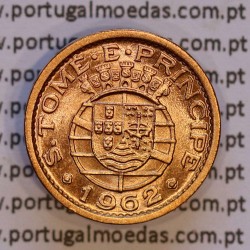
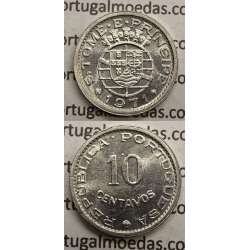
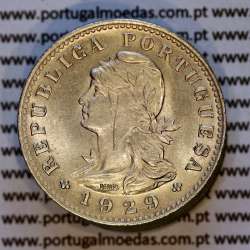
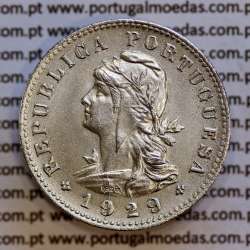
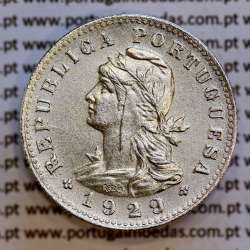
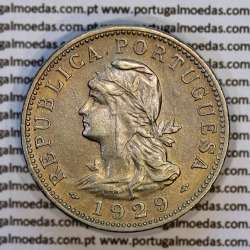
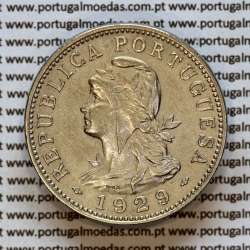
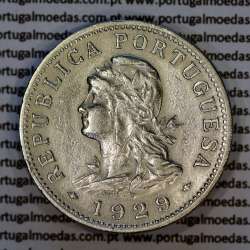
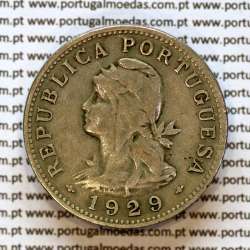
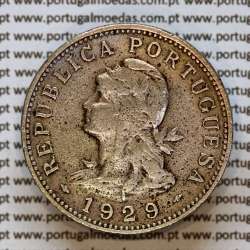
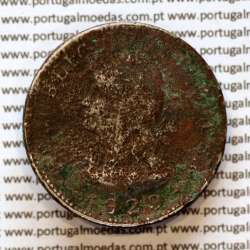
Saint Thomas & Prince, 10 centavos 1929 Nickel brass coin, former Portuguese colony, (AU/UNC), World Coins KM 2
The 1929 10 Centavos coin of São Tomé and Príncipe, struck in alpaca, belongs to the 1st Group of Republican issues listed as 01.01 in the Alberto Gomes catalogue (2006, 2013, 2021). Minted at the Lisbon Mint under Decree No. 16 777 of April 25, 1929, the total mintage reached 500,000 pieces.
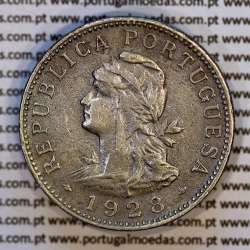
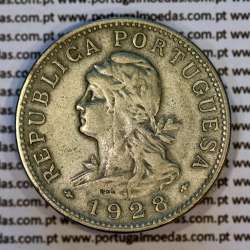
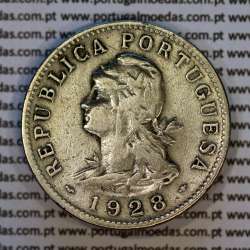
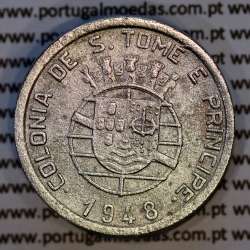
Made of alpaca (Cu 610 – Zn 200 – Ni 190), the coin features a 20 mm diameter, 2.5 g weight, reeded edge, coin alignment (↑↑) and a rim formed by a smooth circle followed by a beaded ornament. The obverse shows the allegorical bust of the Republic wearing a Phrygian cap and laurel wreath, with the legend REPUBLICA PORTUGUESA ✥ 1929 ✥. The reverse displays the Portuguese coat of arms over an armillary sphere, surrounded by the legend S. TOMÉ E PRINCIPE, with the denomination 10 CENTAVOS in two lines.