Popular search terms
Do you want to sell?
Contact us to know how
We buy collections or single pieces of coins, banknotes, stamps, military awards, medals, old postcards, old letters, manuscripts, antiquities and other collectible items.
Send us your list of missing items
Monarchy Coins | Republic | Foreign | Former Portuguese Colonies | Stamps
Coins of Portugal
Portuguese coins from the 2nd century BCE to the present day, covering all issues minted in the territories that form modern Portugal and its former colonies. This category includes Roman, medieval, monarchy, republic, colonial, commemorative, escudo and euro coins, offering a complete overview of the historical and numismatic evolution of Portugal.
Classical Coins
Classical Coins represent the major civilizations of Antiquity and form one of the most important foundations of world numismatics. This category includes Greek, Iberian, Roman, Byzantine, Visigothic, Hispano‑Arab and other ancient cultures whose coinage reflects artistic traditions, political power and economic systems that shaped both Western and Eastern civilizations. It serves as the main gateway to all subcategories dedicated to classical cultures, offering collectors access to thousands of coins spanning centuries of history and cultural diversity.
Foreign Coins - World Coins
World Coins brings together monetary issues from all over the globe, covering hundreds of countries and territories across the five continents, from early modern coinage to contemporary issues. This category includes historical, commemorative, circulating and special coins, offering a broad view of each nation’s economic, political and artistic development. It features rare pieces, thematic series, colonial issues, pre‑independence and post‑independence coinage, all referenced according to the Krause Standard Catalog of World Coins. A comprehensive global collection for collectors seeking diversity, historical value and a complete overview of world numismatics.
Banknotes and Papers of Value
The Banknotes and Collectible Paper Money category brings together a wide range of fiduciary and historical documents of numismatic and archival interest, including banknotes, municipal and private issues, bonds, shares, promissory notes, cheques, revenue‑stamped papers, lottery documents, shipping manifests and other items issued by public and private institutions. These documents represent significant economic, social and administrative records from various historical periods and monetary systems. This category forms the central hub of world paper‑money collecting within our catalogue, offering highly valued historical and collectible pieces.
Philately
Philately encompasses a wide range of items and documents that reflect the postal evolution of Portugal, its former colonies and the wider world. It includes postal history, pre‑philately, classic and contemporary stamps, commemorative issues, thematic series, FDCs, maximum cards, parcel labels, and postal stationery from both the Monarchy and the Republic, as well as specialized literature and collections from PALOP countries. This category also features philatelic lots and accumulations, marcophily items and other materials illustrating postal practices, routes, services and administrative changes across centuries. Philately provides a comprehensive view of this collecting field, allowing collectors to explore rare circulated documents, modern issues and worldwide philately, always with an emphasis on authenticity, historical preservation and thematic diversity.
Miscellaneous
The Miscellaneous category gathers a wide range of collectible items from various fields, including medals, vintage postcards, decorations, antiques, historical documents and manuscripts, old books and bibliographic material, numismatic and philatelic catalogues, collector support materials, pens, watches, matchboxes, pins, historical artefacts and assorted collectible lots. This section is designed to accommodate heterogeneous items with historical, cultural or collectible value, offering visitors a diverse selection of authentic objects from different periods. Its content is continuously updated, reflecting the extensive stock available and providing collectors with unique acquisition opportunities across multiple areas of collecting.
Featured Products
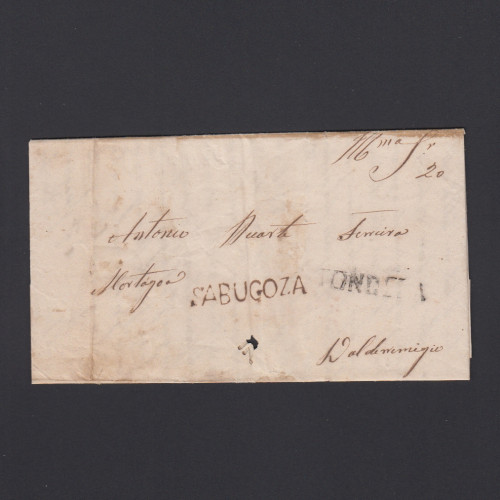
Carta Pré-Filatélica circulada de Sabugoza para Vale Remigio datada 01-12-1848
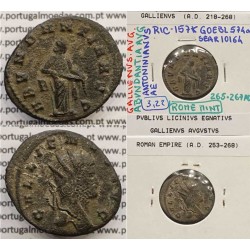
GALLIENUS - ANTONINIANO - GALLIENVS AVG / ABVNDANTIA AVG (265-267 d.C) (253 d.C A 268 d.C )
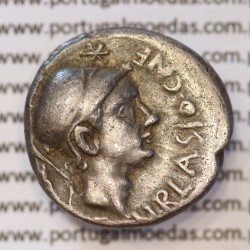
GALLIENUS - ANTONINIANO - GALLIENVS PF AVG / GERMANICVS MAX V (258-259 d.C) (253 d.C A 268 d.C )
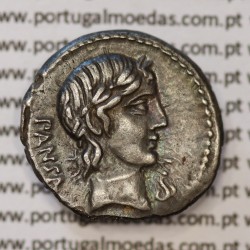
Roman Republican Denarius 90 BC, C. Vibius Pansa, Apollo, Victoria Quadriga, Small Head Variant, Leg: PANSA / C. VIBIVS. C. F.
This silver denarius was minted in 90 BC in Rome by the moneyer C. Vibius Pansa, a member of the ancient Gens Vibia.
The obverse features a laureate head of Apollo facing right, with a snake symbol in front and the legend PANSA behind.
The reverse depicts Victoria driving a quadriga to the right, with the legend C. VIBIVS. C. F. below.
This coin corresponds to the small head variant (~10 mm) of Apollo, one of several known types in this series.
References: Crawford 342/5, Seaby 684, Sear 242.
Moeda de 15 Réis ou 1/4 de Tanga em Cobre Não Datada de Goa, India Portuguesa Reinado D. MARIA II (1834-1853) World Coins KM 263
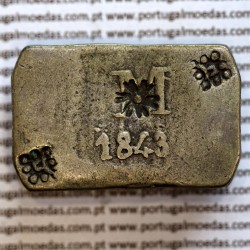
1843 Silver Canelo Ounce Coin from Portuguese Mozambique, Pataca of Queen Maria II (1834–1853). World Coins Mozambique KM26.1.
1843 Silver Canelo Ounce Coin from Mozambique (Portuguese Africa), also known as the Pataca of 6 Cruzados or 2400 réis, Reign of Queen Maria II (1834–1853). At the center, above the "M", it bears a rosette stamp "❊", in compliance with the Second Edict of the Treasury Board dated November 8, 1851. International numismatic reference: World Coins Mozambique KM#26.1. Queen Maria II, nicknamed "The Educator", was the 31st Monarch of Portugal. She was born in 1819 and reigned from 1826 until her death in 1853. She first married Prince August of Leuchtenberg and, after his death, she remarried King Ferdinand II of Saxe-Coburg and Gotha.
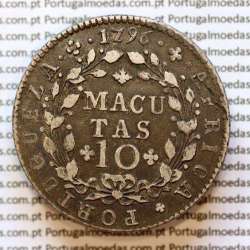
10 Macutas silver 1796 of portuguese queen D. Maria I (1786-1799), Angola Former Colony of Portugal, Coins Angola KM 36
Angola, silver coin of 10 Macutas 1796 of portuguese queen D. Maria I (1786-1799), Angola Former Colony of Portugal, World Coins Angola KM#36. Queen Maria I, known as “The Pious”, was the twenty-seventh monarch of Portugal. She was born in 1734 and reigned from 1750 until her death in 1816. She married King Peter III and had coinage attributed to the three phases of her reign: Single, Married, and Widow. During her rule, coins were minted both for mainland Portugal and for several Portuguese colonies, including Brazil, Angola, Guinea, and India.
UK Orders Only
Hours: 8AM - 11PM
For Order Over $100
For Order Over $100
On All Orders
coin 10 Stotinki 1999 Zinc Copper-Nickel, World Coins Bulgaria KM 240
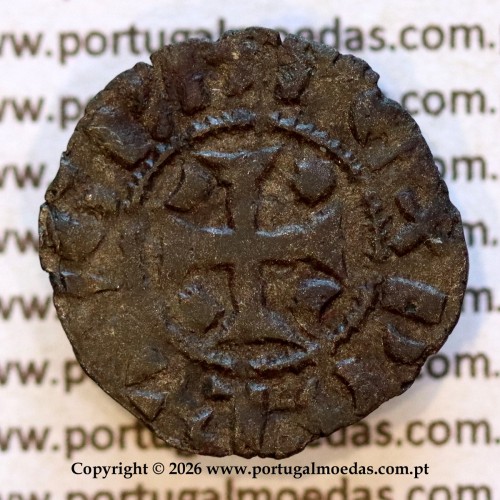
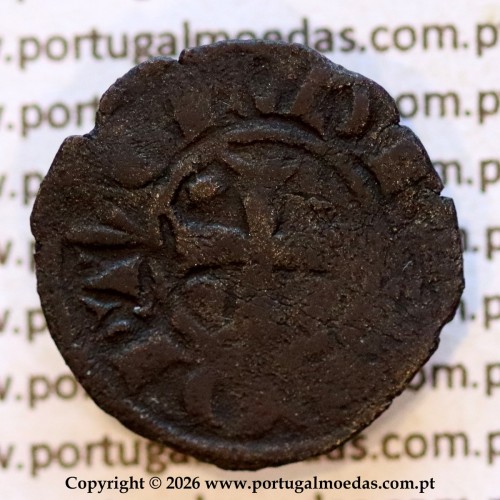
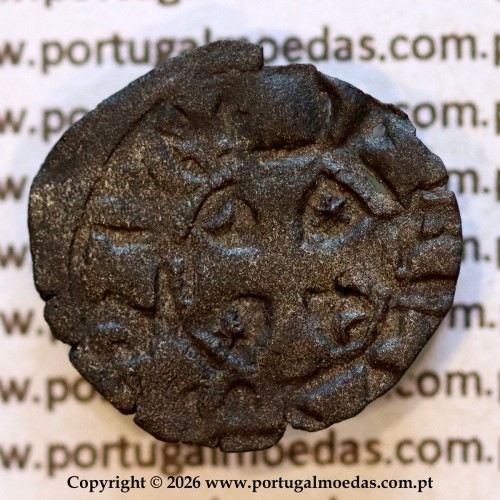
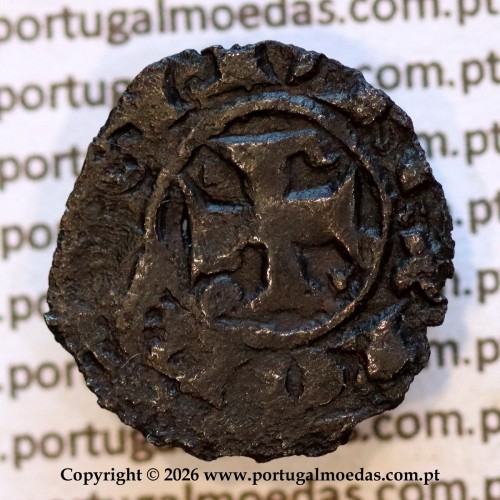
Portugal Tornês de Busto, Ferdinand I (1367–1383), billon, Lisbon Mint, variant with anchor-shaped cross left of bust
issued during the reign of King Ferdinand I, this bust-type tornês struck in billon reflects the evolution of Portuguese royal iconography in the 14th century. Minted in Lisbon, it forms part of the monetary reforms introduced under the Fernandine administration and remains a key reference piece for the study of medieval Portuguese coinage.
Guinea 20 Centavos 1933 bronze, Portuguese Guinea twenty centavos 1933, (XF), World Coins Portuguese Guinea KM#3
Bronze 20 Centavos coin issued in 1933 for Portuguese Guinea, reflecting the classical colonial minting style of the Portuguese Republic. This piece belongs to low‑circulation bronze issues appreciated for their depiction of the Republic and their historical relevance in early 20th‑century colonial coinage.
Guinea 20 Centavos 1933 bronze, Portuguese Guinea twenty centavos 1933, (XF-), World Coins Portuguese Guinea KM#3
Bronze 20 Centavos coin issued in 1933 for Portuguese Guinea, reflecting the classical colonial minting style of the Portuguese Republic. This XF‑ example retains most key design elements of the Republic’s portrait and belongs to the low‑circulation bronze issues of the early 1930s.
Guinea 20 Centavos 1933 bronze, Portuguese Guinea twenty centavos 1933, (XF-), World Coins Portuguese Guinea KM#3
Bronze 20 Centavos coin issued in 1933 for Portuguese Guinea, reflecting the classical colonial minting style of the Portuguese Republic. This XF‑ example retains key design elements of the Republic’s portrait and belongs to the limited‑circulation bronze issues of the early 1930s.
Guinea 20 Centavos 1933 bronze, Portuguese Guinea twenty centavos 1933, (VF+), World Coins Portuguese Guinea KM#3
Bronze 20 Centavos coin issued in 1933 for Portuguese Guinea, reflecting the classical colonial minting style of the Portuguese Republic. This VF+ example shows moderate wear while retaining clear details of the Republic’s portrait, belonging to the limited‑circulation bronze issues of the early 1930s.
Portugal, Nickel brass coin of 50 Centavos 1931 of Portuguese Republic, (VF+), World Coins Portugal KM#577 – option 1
Portuguese Republic 50 Centavos coin issued in 1931 in nickel brass, part of the circulating small‑denomination series produced between 1927 and 1968. This issue is known for its classical iconography and strong historical relevance within the republican monetary system.
Portugal, Nickel brass coin of 50 Centavos 1931 of Portuguese Republic, (VF), World Coins Portugal KM#577 – option 2
Portuguese Republic 50 Centavos coin issued in 1931 in nickel brass, part of the small‑denomination circulating series produced between 1927 and 1968. This issue is recognized for its classical iconography and historical importance within the republican monetary system.
India, 6 Escudos 1959 Nickel brass of the State of Portuguese India, (VF+), World Coins India Portuguese KM#35
Issued in 1959 for circulation in the State of Portuguese India, this 6 Escudos nickel brass coin belongs to group 18.01 of the Alberto Gomes catalogue. It reflects one of the final colonial issues of the territory, preserving the Republican iconography and the traditional arms of Portuguese India.
Cape Verde 50 Centavos 1968 Bronze Coin, Former Portuguese Colony, (UNC), Gomes R.06.01, World Coins KM 11
50 Centavos bronze coin dated 1968 from the former Portuguese colony of Cape Verde, catalogued as KM#11 in World Coins and as R.06.01 in the 2006, 2013 and 2021 editions of the Alberto Gomes catalogue. Issued under the Escudo monetary system (1911–1974) and struck at the Lisbon Mint with a mintage of 1,000,000 pieces. The obverse displays the facial value “50 CENTAVOS”, while the reverse features the colonial coat of arms of Cape Verde over an armillary sphere with mural crown. The coin offered corresponds to the UNC preservation standard, matching the quality shown in the reference image.
Portugal, bronze coin of 20 centavos 1969 Portuguese Republic, XX centavos 1969 Bronze, (UNC), World Coins Portugal KM 584
The 1969 20 centavos bronze coin of the Portuguese Republic belongs to the XX centavos series issued in bronze. This 1969 XX centavos coin is catalogued in World Coins Portugal as KM#584 and in the Alberto Gomes catalogue as R.16.26. It forms part of the bronze XX Centavos series of the Portuguese Republic, struck in the bronze alloy (Cu 950 ‰, Sn 30 ‰ and Zn 20 ‰) and issued in various dates between 1942 and 1969. The series was created under Decree‑Law no. 32 648 of 29 January 1943, and its issuance ceased under Decree‑Law no. 49 167 of 4 August 1969. The total mintage for all dates produced between 1942 and 1969 amounted to 13,084,750 specimens.

Congo – 50 Francs Banknote, 2007 (Uncirculated) – Pick 97
50 Francs banknote from Congo (2007), Pick reference 97, in uncirculated condition.
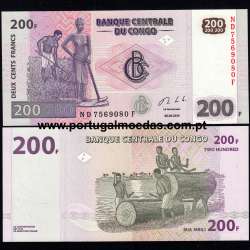
Congo – 200 Francs Banknote, 2013 (Uncirculated) – Pick 99
100 Francs banknote from Congo (2013), Pick reference 99, in uncirculated condition.
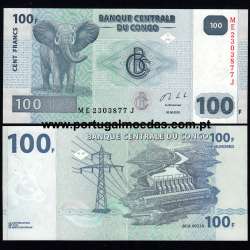
Congo – 100 Francs Banknote, 2013 (Uncirculated) – Pick 98
100 Francs banknote from Congo (2013), Pick reference 98, in uncirculated condition.
Congo – 10 Francs Banknote, 2003 (Uncirculated) – Pick 93
10 Francs banknote from Congo (2003), Pick reference 93, in uncirculated condition.
Cape Verde, Silver coin of 10 escudos 1953 of Former portuguese Colony Cape verde, (UNC), World Coins Cape Verde KM 10
Cape Verde, 10 Escudos 1953 Silver Coin – Former Portuguese Colony – World Coins Cape Verde KM#10. Created under Decree No. 38,975 of October 31, 1952, this coin was minted in silver alloy (Ag 720 - Cu 280) for circulation in the former Portuguese colony of Cape Verde. The Cape Verde archipelago was discovered by Diogo Gomes and António Nola in 1460 and was officially annexed to the Portuguese Empire in 1505. After more than four centuries under colonial rule, Cape Verde gained its independence in 1975.
Cape Verde, 1 Escudo 1968 Bronze of Former Portuguese Colony, (UNC), World Coins Cape Verde KM 8
Cape Verde, 1 Escudo 1968 Bronze – Former Portuguese Colony – World Coins Cape Verde KM#8. Coin issued under Decree No. 38,975 of October 31, 1952. 1 escudo coins dated between 1953 and 1968 were minted in bronze alloy (Cu 950 - Zn 30 - Sn 20), intended for circulation in the former Portuguese colony of Cape Verde. The Cape Verde archipelago was discovered by Diogo Gomes and António Nola in 1460, and in 1505 it was officially annexed to the Portuguese Empire. After more than four centuries under colonial rule, Cape Verde gained its independence in 1975.
Cape Verde, Silver coin of 10 escudos 1953 of Former portuguese Colony Cape verde, (UNC), World Coins Cape Verde KM 10
Cape Verde, 10 Escudos 1953 Silver Coin – Former Portuguese Colony – World Coins Cape Verde KM#10. Created under Decree No. 38,975 of October 31, 1952, this coin was minted in silver alloy (Ag 720 - Cu 280) for circulation in the former Portuguese colony of Cape Verde. The Cape Verde archipelago was discovered by Diogo Gomes and António Nola in 1460 and was officially annexed to the Portuguese Empire in 1505. After more than four centuries under colonial rule, Cape Verde gained its independence in 1975.
Cape Verde, Copper-Nickel coin of 5 Escudos 1968, 5$00 1968 Copper-Nickel, (UNC), World Coins Cape Verde KM 12.
Cape Verde, Cupronickel coin of, 5 Escudos 1968, 5$00 – 1968 Cupronickel of Cape Verde. Catalog: World Coins Cape Verde KM#12. This coin was issued under Decree No. 47,709 of May 17, 1967, for circulation in the former overseas colony of Cape Verde. Only coins dated 1968 were minted, in a cupronickel alloy (composition: 75% copper, 25% nickel).
No products at this time.