Português


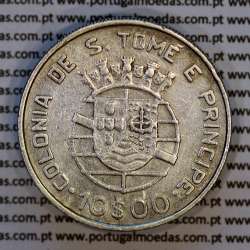
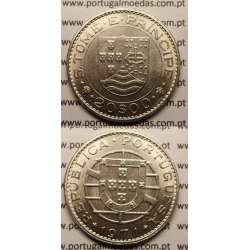
São Tomé and Príncipe, 10 escudos silver coin of 1939, equivalent to 10$00 escudos, issued for the then Portuguese colony of São Tomé and Príncipe and catalogued in World Coins – Saint Thomas & Prince Island KM#7. It was created by Decree No. 28,893 of June 30, 1938, and intended for circulation in the former Portuguese colony of São Tomé and Príncipe, part of Portuguese Africa. The islands of São Tomé and Príncipe remained uninhabited until they were discovered by the Portuguese explorers João de Santarém and Pedro Escobar in 1470. Gradually colonized throughout the 16th century, they became an important trading center within the Atlantic trade network. São Tomé and Príncipe achieved independence in 1975.
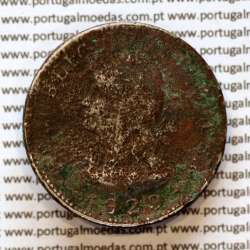
1929 50 centavos cupronickel coin from São Tomé and Príncipe, issued during Portuguese colonial rule for circulation in the archipelago, listed in Alberto Gomes (R.07.02) and the Standard Catalog of World Coins (KM#1).
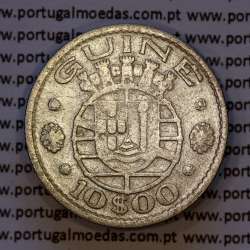
Guinea-Bissau, silver coin of 10 Escudos 1952, 10$00 1952 Former Portuguese colony, World Coins Portuguese Guinea KM#10, coin created by Decree 38585 of December 29, 1951. Portuguese Guinea, later elevated to Overseas Province of Guinea on June 11, 1951 and, finally, State of Guinea in 1972) was the current Guinea-Bissau as a Portuguese colony between 1446 and September 10, 1974. With the Portuguese coup d'état on April 25, 1974, Portugal began negotiations with the PAIGC for decolonization and on September 10, 1974 it became an independent state with the name Guinea-Bissau.