Do you want to sell?

Contact us to know how

We buy collections or single pieces of coins, banknotes, stamps, military awards, medals, old postcards, old letters, manuscripts, antiquities and other collectible items.

Send us your list of missing items

Monarchy Coins | Republic | Foreign | Former Portuguese Colonies | Stamps

Portuguese Municipal Emergency Notes

The municipal emergency notes of Portugal comprise a highly diverse group of local fiduciary issues produced from the late 19th to the early 20th century by councils, parishes, charitable institutions, regional banks and private entities to address coin shortages and local circulation needs. Often printed in small typographies and valid only within their issuing region, these notes vary widely in design, denominations and rarity, making them highly valued by collectors for their historical significance and insight into local economic life.

Portuguese Municipal Notes – Local Emergency Issues, Rare Series & Historical Paper‑Money

There are 63 products.

Showing 1-48 of 63 item(s)

Active filters

Ref: NT.PT.CD.0001.a

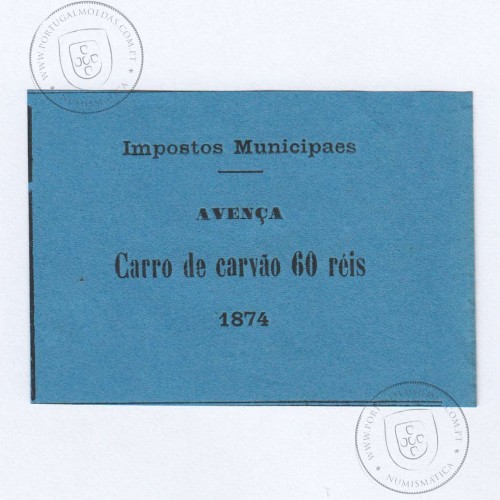
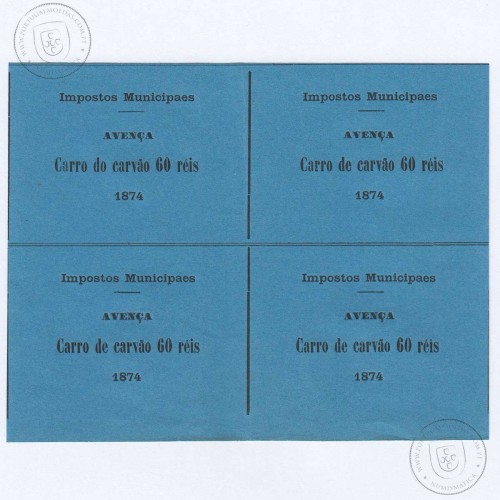
Portugal, Municipal Taxes Receipt Card 1874 "coal car 60 réis 60 réis", (NC), unknown and not listed in any catalogue.

€15.00

Portugal, Municipal Taxes Receipt Card 1874 "coal car 60 réis", its existence unknown and not cataloged to this day in any catalogue. Provenance and origin of use in the former Fábrica de Fiação e Tecidos do Rio Vizela, with some complete sheets of 16 banknotes and banknotes already divided into blocks and isolated pieces having appeared.
Ref: NT.PT.CD.0640.A

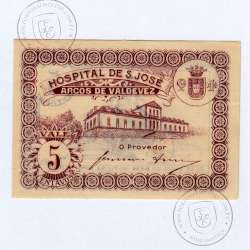
Portuguese notgeld, 5 Centavos Arcos de Valdevez Hospital de S. José, (NC), Private emergency money notes from 1917 to 1925.

€4.50

Portuguese notgeld, 5 Centavos Arcos de Valdevez Hospital de S. José, Reference  nº 640 Type variant I, (NC), Private emergency money notes from 1917 to 1925. In Portugal, there were two main periods of emergency money, the first being during the financial crisis of 1891, the second, at the end of the First World War, between 1917 and 1925, it is in this last period where a greater issuance and increase in emergency money is concentrated. Due to the great inflation that led to the devaluation of money and the increase in the value of the metals used in coins, which was already higher than their face value, leading to the almost total disappearance of coins from the market, these were hoarded as an investment by people or they were looted from the market because their face value was lower than their intrinsic value. In such circumstances, in which metallic coins were almost extinct, the need for small money was increasingly felt, a new resource currency appeared, the paper banknote which was intended to replace coins from one to twenty cents, whose issuance was initially only authorized by the Mint, but, as the measure was insufficiency, it proved to be incapable of filling the shortage of coins, resulting in its issuance being authorized under the responsibility of municipal councils, Misericórdias and other public entities, and even private individuals, even though some were considered illegal, they were still accepted locally as the only way to make up for the shortage of change in small, day-to-day commercial transactions.
Ref: NT.PT.CD.0641.A

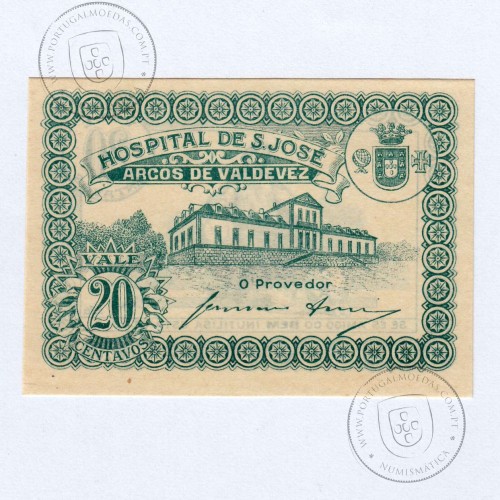
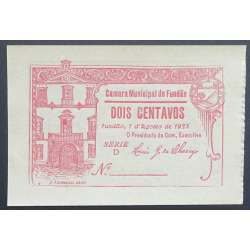
Portuguese notgeld 20 Centavos Arcos de Valdevez Hospital de S. José, (NC), Private emergency money notes from 1917-1925.

€4.50

Portuguese notgeld 20 Centavos Arcos de Valdevez Hospital de S. José, Ref. nº 641, (NC), Private emergency money notes from 1917 to 1925. In Portugal, there were two main periods of emergency money, the first being during the financial crisis of 1891, the second, at the end of the First World War, between 1917 and 1925, it is in this last period where a greater issuance and increase in emergency money is concentrated. Due to the great inflation that led to the devaluation of money and the increase in the value of the metals used in coins, which was already higher than their face value, leading to the almost total disappearance of coins from the market, these were hoarded as an investment by people or they were looted from the market because their face value was lower than their intrinsic value. In such circumstances, in which metallic coins were almost extinct, the need for small money was increasingly felt, a new resource currency appeared, the paper banknote which was intended to replace coins from one to twenty cents, whose issuance was initially only authorized by the Mint, but, as the measure was insufficiency, it proved to be incapable of filling the shortage of coins, resulting in its issuance being authorized under the responsibility of municipal councils, Misericórdias and other public entities, and even private individuals, even though some were considered illegal, they were still accepted locally as the only way to make up for the shortage of change in small, day-to-day commercial transactions.
Ref: NT.PT.CD.0921.C

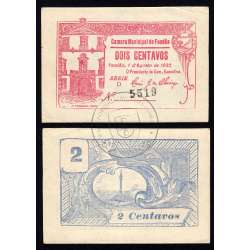
Portuguese notgeld, 2 Centavos Camara Municipal de Borba, (C), Private emergency money notes from 1917 to 1925.

€15.00

Portuguese notgeld, 2 Centavos Camara Municipal de Borba, "De 20 Maio de 1921",  Private emergency money notes from 1917 to 1925. In Portugal, there were two main periods of emergency money, the first being during the financial crisis of 1891, the second, at the end of the First World War, between 1917 and 1925, it is in this last period where a greater issuance and increase in emergency money is concentrated. Due to the great inflation that led to the devaluation of money and the increase in the value of the metals used in coins, which was already higher than their face value, leading to the almost total disappearance of coins from the market, these were hoarded as an investment by people or they were looted from the market because their face value was lower than their intrinsic value. In such circumstances, in which metallic coins were almost extinct, the need for small money was increasingly felt, a new resource currency appeared, the paper banknote which was intended to replace coins from one to twenty cents, whose issuance was initially only authorized by the Mint, but, as the measure was insufficiency, it proved to be incapable of filling the shortage of coins, resulting in its issuance being authorized under the responsibility of municipal councils, Misericórdias and other public entities, and even private individuals, even though some were considered illegal, they were still accepted locally as the only way to make up for the shortage of change in small, day-to-day commercial transactions.

Ref: NT.PT.CD.1147.A

Portuguese notgeld, 1 Centavo Camara Municipal de Bragança, series E, (NC), Private emergency money notes from 1917 to 1925.

€18.00

Portuguese notgeld, 1 Centavo Camara Municipal de Bragança, series E Nº 1939, Private emergency money notes from 1917 to 1925. In Portugal, there were two main periods of emergency money, the first being during the financial crisis of 1891, the second, at the end of the First World War, between 1917 and 1925, it is in this last period where a greater issuance and increase in emergency money is concentrated. Due to the great inflation that led to the devaluation of money and the increase in the value of the metals used in coins, which was already higher than their face value, leading to the almost total disappearance of coins from the market, these were hoarded as an investment by people or they were looted from the market because their face value was lower than their intrinsic value. In such circumstances, in which metallic coins were almost extinct, the need for small money was increasingly felt, a new resource currency appeared, the paper banknote which was intended to replace coins from one to twenty cents, whose issuance was initially only authorized by the Mint, but, as the measure was insufficiency, it proved to be incapable of filling the shortage of coins, resulting in its issuance being authorized under the responsibility of municipal councils, Misericórdias and other public entities, and even private individuals, even though some were considered illegal, they were still accepted locally as the only way to make up for the shortage of change in small, day-to-day commercial transactions.

Ref: NT.PT.CD.1148.A

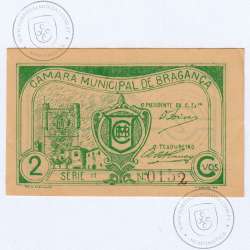
Portuguese notgeld, 2 Centavos Camara Municipal de Bragança, series H, (NC), Private emergency money notes from 1917 to 1925.

€18.00

Portuguese notgeld, 2 Centavos Camara Municipal de Bragança, series H Nº 0152, Private emergency money notes from 1917 to 1925. In Portugal, there were two main periods of emergency money, the first being during the financial crisis of 1891, the second, at the end of the First World War, between 1917 and 1925, it is in this last period where a greater issuance and increase in emergency money is concentrated. Due to the great inflation that led to the devaluation of money and the increase in the value of the metals used in coins, which was already higher than their face value, leading to the almost total disappearance of coins from the market, these were hoarded as an investment by people or they were looted from the market because their face value was lower than their intrinsic value. In such circumstances, in which metallic coins were almost extinct, the need for small money was increasingly felt, a new resource currency appeared, the paper banknote which was intended to replace coins from one to twenty cents, whose issuance was initially only authorized by the Mint, but, as the measure was insufficiency, it proved to be incapable of filling the shortage of coins, resulting in its issuance being authorized under the responsibility of municipal councils, Misericórdias and other public entities, and even private individuals, even though some were considered illegal, they were still accepted locally as the only way to make up for the shortage of change in small, day-to-day commercial transactions.

Ref: NT.PT.CD.1149.A

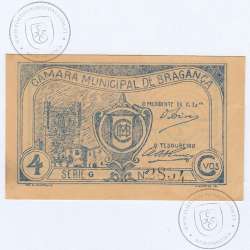
Portuguese notgeld, 4 Centavos Camara Municipal de Bragança, series G, (NC), Private emergency money notes from 1917 to 1925.

€18.00

Portuguese notgeld, 4 Centavos Camara Municipal de Bragança, series G Nº 2854, Private emergency money notes from 1917 to 1925. In Portugal, there were two main periods of emergency money, the first being during the financial crisis of 1891, the second, at the end of the First World War, between 1917 and 1925, it is in this last period where a greater issuance and increase in emergency money is concentrated. Due to the great inflation that led to the devaluation of money and the increase in the value of the metals used in coins, which was already higher than their face value, leading to the almost total disappearance of coins from the market, these were hoarded as an investment by people or they were looted from the market because their face value was lower than their intrinsic value. In such circumstances, in which metallic coins were almost extinct, the need for small money was increasingly felt, a new resource currency appeared, the paper banknote which was intended to replace coins from one to twenty cents, whose issuance was initially only authorized by the Mint, but, as the measure was insufficiency, it proved to be incapable of filling the shortage of coins, resulting in its issuance being authorized under the responsibility of municipal councils, Misericórdias and other public entities, and even private individuals, even though some were considered illegal, they were still accepted locally as the only way to make up for the shortage of change in small, day-to-day commercial transactions.

Ref: NT.PT.CD.1149.E

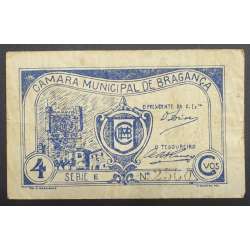
Portuguese notgeld, 4 Centavos Camara Municipal de Bragança, series E, (C), Private emergency money notes from 1917 to 1925.

€15.00

Portuguese notgeld, 4 Centavos Camara Municipal de Bragança, series E, (C), Private emergency money notes from 1917 to 1925. In Portugal, there were two main periods of emergency money, the first being during the financial crisis of 1891, the second, at the end of the First World War, between 1917 and 1925, it is in this last period where a greater issuance and increase in emergency money is concentrated. Due to the great inflation that led to the devaluation of money and the increase in the value of the metals used in coins, which was already higher than their face value, leading to the almost total disappearance of coins from the market, these were hoarded as an investment by people or they were looted from the market because their face value was lower than their intrinsic value. In such circumstances, in which metallic coins were almost extinct, the need for small money was increasingly felt, a new resource currency appeared, the paper banknote which was intended to replace coins from one to twenty cents, whose issuance was initially only authorized by the Mint, but, as the measure was insufficiency, it proved to be incapable of filling the shortage of coins, resulting in its issuance being authorized under the responsibility of municipal councils, Misericórdias and other public entities, and even private individuals, even though some were considered illegal, they were still accepted locally as the only way to make up for the shortage of change in small, day-to-day commercial transactions.

Ref: NT.PT.CD.1288.A

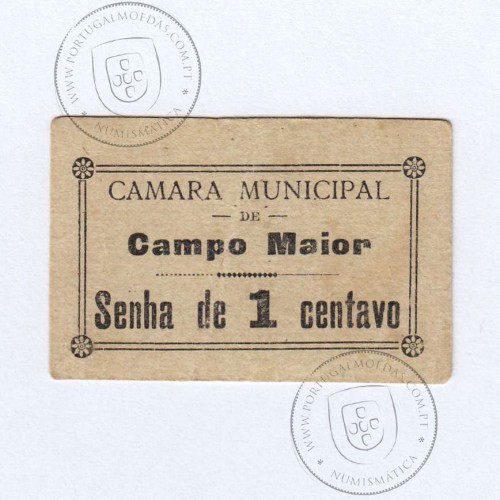
Portuguese notgeld, 1 Centavo Camara Municipal de Campo Maior, (PC), Private emergency money notes from 1917 to 1925.

€38.00

Portuguese notgeld, 1 Centavo Camara Municipal de Campo Maior,  Private emergency money notes from 1917 to 1925. In Portugal, there were two main periods of emergency money, the first being during the financial crisis of 1891, the second, at the end of the First World War, between 1917 and 1925, it is in this last period where a greater issuance and increase in emergency money is concentrated. Due to the great inflation that led to the devaluation of money and the increase in the value of the metals used in coins, which was already higher than their face value, leading to the almost total disappearance of coins from the market, these were hoarded as an investment by people or they were looted from the market because their face value was lower than their intrinsic value. In such circumstances, in which metallic coins were almost extinct, the need for small money was increasingly felt, a new resource currency appeared, the paper banknote which was intended to replace coins from one to twenty cents, whose issuance was initially only authorized by the Mint, but, as the measure was insufficiency, it proved to be incapable of filling the shortage of coins, resulting in its issuance being authorized under the responsibility of municipal councils, Misericórdias and other public entities, and even private individuals, even though some were considered illegal, they were still accepted locally as the only way to make up for the shortage of change in small, day-to-day commercial transactions.

Ref: NT.PT.CD.1290.A

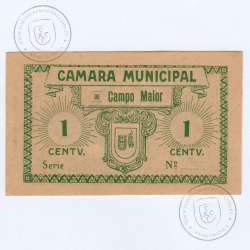
Portuguese notgeld, 1 Centavo Camara Municipal de Campo Maior, (NC), Private emergency money notes from 1917 to 1925.

€35.00

Portuguese notgeld, 1 Centavo Camara Municipal de Campo Maior, type "Empresa..." (wiht "S"), Private emergency money notes from 1917 to 1925. In Portugal, there were two main periods of emergency money, the first being during the financial crisis of 1891, the second, at the end of the First World War, between 1917 and 1925, it is in this last period where a greater issuance and increase in emergency money is concentrated. Due to the great inflation that led to the devaluation of money and the increase in the value of the metals used in coins, which was already higher than their face value, leading to the almost total disappearance of coins from the market, these were hoarded as an investment by people or they were looted from the market because their face value was lower than their intrinsic value. In such circumstances, in which metallic coins were almost extinct, the need for small money was increasingly felt, a new resource currency appeared, the paper banknote which was intended to replace coins from one to twenty cents, whose issuance was initially only authorized by the Mint, but, as the measure was insufficiency, it proved to be incapable of filling the shortage of coins, resulting in its issuance being authorized under the responsibility of municipal councils, Misericórdias and other public entities, and even private individuals, even though some were considered illegal, they were still accepted locally as the only way to make up for the shortage of change in small, day-to-day commercial transactions.

Ref: NT.PT.CD.1293.A

Portuguese notgeld, 5 Centavos Camara Municipal de Campo Maior, (NC), Private emergency money notes from 1917 to 1925.

€35.00

Portuguese notgeld, 5 Centavos Camara Municipal de Campo Maior, type "Empresa..." (wiht "S"), Private emergency money notes from 1917 to 1925. In Portugal, there were two main periods of emergency money, the first being during the financial crisis of 1891, the second, at the end of the First World War, between 1917 and 1925, it is in this last period where a greater issuance and increase in emergency money is concentrated. Due to the great inflation that led to the devaluation of money and the increase in the value of the metals used in coins, which was already higher than their face value, leading to the almost total disappearance of coins from the market, these were hoarded as an investment by people or they were looted from the market because their face value was lower than their intrinsic value. In such circumstances, in which metallic coins were almost extinct, the need for small money was increasingly felt, a new resource currency appeared, the paper banknote which was intended to replace coins from one to twenty cents, whose issuance was initially only authorized by the Mint, but, as the measure was insufficiency, it proved to be incapable of filling the shortage of coins, resulting in its issuance being authorized under the responsibility of municipal councils, Misericórdias and other public entities, and even private individuals, even though some were considered illegal, they were still accepted locally as the only way to make up for the shortage of change in small, day-to-day commercial transactions.

Ref: NT.PT.CD.1610.B

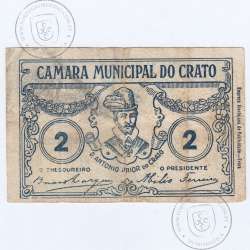
Portuguese notgeld, 2 Centavos Camara Municipal do Crato, (C), Private emergency money notes from 1917 to 1925.

€35.00

Portuguese notgeld, 2 Centavos Camara Municipal do Crato, type "Empresa..." (wiht "S"), Private emergency money notes from 1917 to 1925. In Portugal, there were two main periods of emergency money, the first being during the financial crisis of 1891, the second, at the end of the First World War, between 1917 and 1925, it is in this last period where a greater issuance and increase in emergency money is concentrated. Due to the great inflation that led to the devaluation of money and the increase in the value of the metals used in coins, which was already higher than their face value, leading to the almost total disappearance of coins from the market, these were hoarded as an investment by people or they were looted from the market because their face value was lower than their intrinsic value. In such circumstances, in which metallic coins were almost extinct, the need for small money was increasingly felt, a new resource currency appeared, the paper banknote which was intended to replace coins from one to twenty cents, whose issuance was initially only authorized by the Mint, but, as the measure was insufficiency, it proved to be incapable of filling the shortage of coins, resulting in its issuance being authorized under the responsibility of municipal councils, Misericórdias and other public entities, and even private individuals, even though some were considered illegal, they were still accepted locally as the only way to make up for the shortage of change in small, day-to-day commercial transactions.

Ref: NT.PT.CD.1643.A

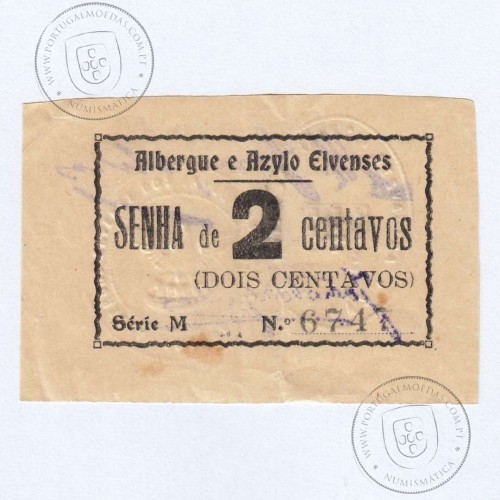
Portuguese notgeld, 2 centavos Albergue e Azylo Elvenses, Elvas, (QNC), Private emergency money notes from 1917 to 1925.

€35.00

Portuguese notgeld, 2 centavos Albergue e Azylo Elvenses, (QNC), Private emergency money notes from 1917 to 1925. In Portugal, there were two main periods of emergency money, the first being during the financial crisis of 1891, the second, at the end of the First World War, between 1917 and 1925, it is in this last period where a greater issuance and increase in emergency money is concentrated. Due to the great inflation that led to the devaluation of money and the increase in the value of the metals used in coins, which was already higher than their face value, leading to the almost total disappearance of coins from the market, these were hoarded as an investment by people or they were looted from the market because their face value was lower than their intrinsic value. In such circumstances, in which metallic coins were almost extinct, the need for small money was increasingly felt, a new resource currency appeared, the paper banknote which was intended to replace coins from one to twenty cents, whose issuance was initially only authorized by the Mint, but, as the measure was insufficiency, it proved to be incapable of filling the shortage of coins, resulting in its issuance being authorized under the responsibility of municipal councils, Misericórdias and other public entities, and even private individuals, even though some were considered illegal, they were still accepted locally as the only way to make up for the shortage of change in small, day-to-day commercial transactions.

Ref: NT.PT.CD.1645.A

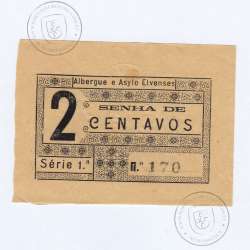
Portuguese notgeld, 2 centavos Albergue e Azylo Elvenses, Elvas, (NC), Private emergency money notes from 1917 to 1925.

€50.00

Portuguese notgeld, 2 centavos Albergue e Azylo Elvenses, (QNC), Private emergency money notes from 1917 to 1925. In Portugal, there were two main periods of emergency money, the first being during the financial crisis of 1891, the second, at the end of the First World War, between 1917 and 1925, it is in this last period where a greater issuance and increase in emergency money is concentrated. Due to the great inflation that led to the devaluation of money and the increase in the value of the metals used in coins, which was already higher than their face value, leading to the almost total disappearance of coins from the market, these were hoarded as an investment by people or they were looted from the market because their face value was lower than their intrinsic value. In such circumstances, in which metallic coins were almost extinct, the need for small money was increasingly felt, a new resource currency appeared, the paper banknote which was intended to replace coins from one to twenty cents, whose issuance was initially only authorized by the Mint, but, as the measure was insufficiency, it proved to be incapable of filling the shortage of coins, resulting in its issuance being authorized under the responsibility of municipal councils, Misericórdias and other public entities, and even private individuals, even though some were considered illegal, they were still accepted locally as the only way to make up for the shortage of change in small, day-to-day commercial transactions.

Ref: NT.PT.CD.1719.A

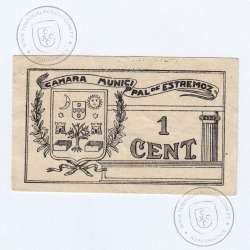
Portuguese notgeld, 1 Centavo Camara Municipal de Estremoz, Évora, (PC), Private emergency money notes from 1917 to 1925.

€12.00

Portuguese notgeld, 1 Centavo Camara Municipal de Estremoz, Évora, (PC), Private emergency money notes from 1917 to 1925. In Portugal, there were two main periods of emergency money, the first being during the financial crisis of 1891, the second, at the end of the First World War, between 1917 and 1925, it is in this last period where a greater issuance and increase in emergency money is concentrated. Due to the great inflation that led to the devaluation of money and the increase in the value of the metals used in coins, which was already higher than their face value, leading to the almost total disappearance of coins from the market, these were hoarded as an investment by people or they were looted from the market because their face value was lower than their intrinsic value. In such circumstances, in which metallic coins were almost extinct, the need for small money was increasingly felt, a new resource currency appeared, the paper banknote which was intended to replace coins from one to twenty cents, whose issuance was initially only authorized by the Mint, but, as the measure was insufficiency, it proved to be incapable of filling the shortage of coins, resulting in its issuance being authorized under the responsibility of municipal councils, Misericórdias and other public entities, and even private individuals, even though some were considered illegal, they were still accepted locally as the only way to make up for the shortage of change in small, day-to-day commercial transactions.

Ref: NT.PT.CD.1719.C

Portuguese notgeld, 1 Centavo Camara Municipal de Estremoz, Évora, (QNC), Private emergency money notes from 1917 to 1925.

€15.00

Portuguese notgeld, 1 Centavo Camara Municipal de Estremoz, Évora, (PC), Private emergency money notes from 1917 to 1925. In Portugal, there were two main periods of emergency money, the first being during the financial crisis of 1891, the second, at the end of the First World War, between 1917 and 1925, it is in this last period where a greater issuance and increase in emergency money is concentrated. Due to the great inflation that led to the devaluation of money and the increase in the value of the metals used in coins, which was already higher than their face value, leading to the almost total disappearance of coins from the market, these were hoarded as an investment by people or they were looted from the market because their face value was lower than their intrinsic value. In such circumstances, in which metallic coins were almost extinct, the need for small money was increasingly felt, a new resource currency appeared, the paper banknote which was intended to replace coins from one to twenty cents, whose issuance was initially only authorized by the Mint, but, as the measure was insufficiency, it proved to be incapable of filling the shortage of coins, resulting in its issuance being authorized under the responsibility of municipal councils, Misericórdias and other public entities, and even private individuals, even though some were considered illegal, they were still accepted locally as the only way to make up for the shortage of change in small, day-to-day commercial transactions.

Ref: NT.PT.CD.1752.A

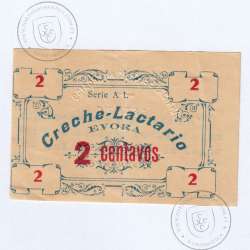
Portuguese notgeld, 2 Centavos Creche-Lactário de Évora, (QNC), Private emergency money notes from 1917 to 1925.

€45.00

Portuguese notgeld, 2 Centavos Creche-Lactário de Évora, Private emergency money notes from 1917 to 1925. In Portugal, there were two main periods of emergency money, the first being during the financial crisis of 1891, the second, at the end of the First World War, between 1917 and 1925, it is in this last period where a greater issuance and increase in emergency money is concentrated. Due to the great inflation that led to the devaluation of money and the increase in the value of the metals used in coins, which was already higher than their face value, leading to the almost total disappearance of coins from the market, these were hoarded as an investment by people or they were looted from the market because their face value was lower than their intrinsic value. In such circumstances, in which metallic coins were almost extinct, the need for small money was increasingly felt, a new resource currency appeared, the paper banknote which was intended to replace coins from one to twenty cents, whose issuance was initially only authorized by the Mint, but, as the measure was insufficiency, it proved to be incapable of filling the shortage of coins, resulting in its issuance being authorized under the responsibility of municipal councils, Misericórdias and other public entities, and even private individuals, even though some were considered illegal, they were still accepted locally as the only way to make up for the shortage of change in small, day-to-day commercial transactions.

Ref: NT.PT.CD.1755.J

Portuguese notgeld, 1 Centavo Creche-Lactário de Évora, (NC), Private emergency money notes from 1917 to 1925.

€45.00

Portuguese notgeld, 1 Centavo Creche-Lactário de Évora, (NC), Private emergency money notes from 1917 to 1925. In Portugal, there were two main periods of emergency money, the first being during the financial crisis of 1891, the second, at the end of the First World War, between 1917 and 1925, it is in this last period where a greater issuance and increase in emergency money is concentrated. Due to the great inflation that led to the devaluation of money and the increase in the value of the metals used in coins, which was already higher than their face value, leading to the almost total disappearance of coins from the market, these were hoarded as an investment by people or they were looted from the market because their face value was lower than their intrinsic value. In such circumstances, in which metallic coins were almost extinct, the need for small money was increasingly felt, a new resource currency appeared, the paper banknote which was intended to replace coins from one to twenty cents, whose issuance was initially only authorized by the Mint, but, as the measure was insufficiency, it proved to be incapable of filling the shortage of coins, resulting in its issuance being authorized under the responsibility of municipal councils, Misericórdias and other public entities, and even private individuals, even though some were considered illegal, they were still accepted locally as the only way to make up for the shortage of change in small, day-to-day commercial transactions.

Ref: NT.PT.CD.1767.A

Portuguese notgeld, 5 Centavos Misericórdia de Évora, (QNC), Private emergency money notes from 1917 to 1925.

€40.00

Portuguese notgeld, 5 Centavos Misericórdia de Évora, (QNC), Private emergency money notes from 1917 to 1925. In Portugal, there were two main periods of emergency money, the first being during the financial crisis of 1891, the second, at the end of the First World War, between 1917 and 1925, it is in this last period where a greater issuance and increase in emergency money is concentrated. Due to the great inflation that led to the devaluation of money and the increase in the value of the metals used in coins, which was already higher than their face value, leading to the almost total disappearance of coins from the market, these were hoarded as an investment by people or they were looted from the market because their face value was lower than their intrinsic value. In such circumstances, in which metallic coins were almost extinct, the need for small money was increasingly felt, a new resource currency appeared, the paper banknote which was intended to replace coins from one to twenty cents, whose issuance was initially only authorized by the Mint, but, as the measure was insufficiency, it proved to be incapable of filling the shortage of coins, resulting in its issuance being authorized under the responsibility of municipal councils, Misericórdias and other public entities, and even private individuals, even though some were considered illegal, they were still accepted locally as the only way to make up for the shortage of change in small, day-to-day commercial transactions.

Ref: NT.PT.CD.1770.H

Portuguese notgeld, 10 Centavos Misericórdia de Évora, (QNC), Private emergency money notes from 1917 to 1925.

€40.00

Portuguese notgeld, 10 Centavos Misericórdia de Évora, (QNC), Private emergency money notes from 1917 to 1925. In Portugal, there were two main periods of emergency money, the first being during the financial crisis of 1891, the second, at the end of the First World War, between 1917 and 1925, it is in this last period where a greater issuance and increase in emergency money is concentrated. Due to the great inflation that led to the devaluation of money and the increase in the value of the metals used in coins, which was already higher than their face value, leading to the almost total disappearance of coins from the market, these were hoarded as an investment by people or they were looted from the market because their face value was lower than their intrinsic value. In such circumstances, in which metallic coins were almost extinct, the need for small money was increasingly felt, a new resource currency appeared, the paper banknote which was intended to replace coins from one to twenty cents, whose issuance was initially only authorized by the Mint, but, as the measure was insufficiency, it proved to be incapable of filling the shortage of coins, resulting in its issuance being authorized under the responsibility of municipal councils, Misericórdias and other public entities, and even private individuals, even though some were considered illegal, they were still accepted locally as the only way to make up for the shortage of change in small, day-to-day commercial transactions.

Ref: NT.PT.CD.1949.B

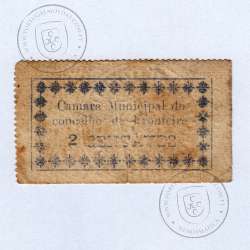
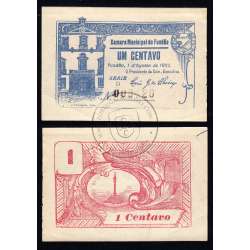
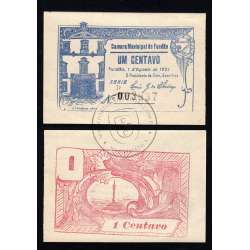
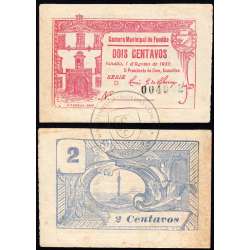
Portuguese notgeld, 2 Centavos Camara Municipal do Concelho de Fronteira, (C), Private emergency money notes from 1917 to 1925.

€38.00

Portuguese notgeld, 2 Centavos Camara Municipal do Concelho de Fronteira, (C), Private emergency money notes from 1917 to 1925. In Portugal, there were two main periods of emergency money, the first being during the financial crisis of 1891, the second, at the end of the First World War, between 1917 and 1925, it is in this last period where a greater issuance and increase in emergency money is concentrated. Due to the great inflation that led to the devaluation of money and the increase in the value of the metals used in coins, which was already higher than their face value, leading to the almost total disappearance of coins from the market, these were hoarded as an investment by people or they were looted from the market because their face value was lower than their intrinsic value. In such circumstances, in which metallic coins were almost extinct, the need for small money was increasingly felt, a new resource currency appeared, the paper banknote which was intended to replace coins from one to twenty cents, whose issuance was initially only authorized by the Mint, but, as the measure was insufficiency, it proved to be incapable of filling the shortage of coins, resulting in its issuance being authorized under the responsibility of municipal councils, Misericórdias and other public entities, and even private individuals, even though some were considered illegal, they were still accepted locally as the only way to make up for the shortage of change in small, day-to-day commercial transactions.

Ref: NT.PT.CD.2492.A

Portuguese notgeld, 1 Centavo Camara Municipal de Loures, (NC), Private emergency money notes from 1917 to 1925.

€70.00

Portuguese notgeld, 1 Centavo Camara Municipal de Loures,  (NC), Private emergency money notes from 1917 to 1925. In Portugal, there were two main periods of emergency money, the first being during the financial crisis of 1891, the second, at the end of the First World War, between 1917 and 1925, it is in this last period where a greater issuance and increase in emergency money is concentrated. Due to the great inflation that led to the devaluation of money and the increase in the value of the metals used in coins, which was already higher than their face value, leading to the almost total disappearance of coins from the market, these were hoarded as an investment by people or they were looted from the market because their face value was lower than their intrinsic value. In such circumstances, in which metallic coins were almost extinct, the need for small money was increasingly felt, a new resource currency appeared, the paper banknote which was intended to replace coins from one to twenty cents, whose issuance was initially only authorized by the Mint, but, as the measure was insufficiency, it proved to be incapable of filling the shortage of coins, resulting in its issuance being authorized under the responsibility of municipal councils, Misericórdias and other public entities, and even private individuals, even though some were considered illegal, they were still accepted locally as the only way to make up for the shortage of change in small, day-to-day commercial transactions.

Ref: NT.PT.CD.2494.A

Portuguese notgeld, 2 Centavos Camara Municipal de Loures, (NC), Private emergency money notes from 1917 to 1925.

€70.00

Portuguese notgeld, 2 Centavos Camara Municipal de Loures,  (NC), Private emergency money notes from 1917 to 1925. In Portugal, there were two main periods of emergency money, the first being during the financial crisis of 1891, the second, at the end of the First World War, between 1917 and 1925, it is in this last period where a greater issuance and increase in emergency money is concentrated. Due to the great inflation that led to the devaluation of money and the increase in the value of the metals used in coins, which was already higher than their face value, leading to the almost total disappearance of coins from the market, these were hoarded as an investment by people or they were looted from the market because their face value was lower than their intrinsic value. In such circumstances, in which metallic coins were almost extinct, the need for small money was increasingly felt, a new resource currency appeared, the paper banknote which was intended to replace coins from one to twenty cents, whose issuance was initially only authorized by the Mint, but, as the measure was insufficiency, it proved to be incapable of filling the shortage of coins, resulting in its issuance being authorized under the responsibility of municipal councils, Misericórdias and other public entities, and even private individuals, even though some were considered illegal, they were still accepted locally as the only way to make up for the shortage of change in small, day-to-day commercial transactions.

Ref: NT.PT.CD.2557.A

Portuguese notgeld, 1 Centavo Camara Municipal de Mafra, (NC), Private emergency money notes from 1917 to 1925.

€40.00

Portuguese notgeld, 1 Centavo Camara Municipal de Mafra,  (NC), Private emergency money notes from 1917 to 1925. In Portugal, there were two main periods of emergency money, the first being during the financial crisis of 1891, the second, at the end of the First World War, between 1917 and 1925, it is in this last period where a greater issuance and increase in emergency money is concentrated. Due to the great inflation that led to the devaluation of money and the increase in the value of the metals used in coins, which was already higher than their face value, leading to the almost total disappearance of coins from the market, these were hoarded as an investment by people or they were looted from the market because their face value was lower than their intrinsic value. In such circumstances, in which metallic coins were almost extinct, the need for small money was increasingly felt, a new resource currency appeared, the paper banknote which was intended to replace coins from one to twenty cents, whose issuance was initially only authorized by the Mint, but, as the measure was insufficiency, it proved to be incapable of filling the shortage of coins, resulting in its issuance being authorized under the responsibility of municipal councils, Misericórdias and other public entities, and even private individuals, even though some were considered illegal, they were still accepted locally as the only way to make up for the shortage of change in small, day-to-day commercial transactions.

Ref: NT.PT.CD.2558.A

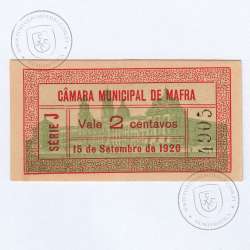
Portuguese notgeld, 2 Centavos Camara Municipal de Mafra, (NC), Private emergency money notes from 1917 to 1925.

€40.00

Portuguese notgeld, 2 Centavos Camara Municipal de Mafra,  (NC), Private emergency money notes from 1917 to 1925. In Portugal, there were two main periods of emergency money, the first being during the financial crisis of 1891, the second, at the end of the First World War, between 1917 and 1925, it is in this last period where a greater issuance and increase in emergency money is concentrated. Due to the great inflation that led to the devaluation of money and the increase in the value of the metals used in coins, which was already higher than their face value, leading to the almost total disappearance of coins from the market, these were hoarded as an investment by people or they were looted from the market because their face value was lower than their intrinsic value. In such circumstances, in which metallic coins were almost extinct, the need for small money was increasingly felt, a new resource currency appeared, the paper banknote which was intended to replace coins from one to twenty cents, whose issuance was initially only authorized by the Mint, but, as the measure was insufficiency, it proved to be incapable of filling the shortage of coins, resulting in its issuance being authorized under the responsibility of municipal councils, Misericórdias and other public entities, and even private individuals, even though some were considered illegal, they were still accepted locally as the only way to make up for the shortage of change in small, day-to-day commercial transactions.

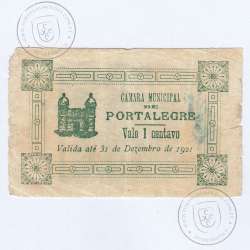
Ref: NT.PT.CD.3387.B

Portuguese notgeld, 1 Centavo Camara Municipal de Portalegre, (C), Private emergency money notes from 1917 to 1925.

€38.00

Portuguese notgeld, 1 Centavo Camara Municipal de Portalegre,  (C), Private emergency money notes from 1917 to 1925. In Portugal, there were two main periods of emergency money, the first being during the financial crisis of 1891, the second, at the end of the First World War, between 1917 and 1925, it is in this last period where a greater issuance and increase in emergency money is concentrated. Due to the great inflation that led to the devaluation of money and the increase in the value of the metals used in coins, which was already higher than their face value, leading to the almost total disappearance of coins from the market, these were hoarded as an investment by people or they were looted from the market because their face value was lower than their intrinsic value. In such circumstances, in which metallic coins were almost extinct, the need for small money was increasingly felt, a new resource currency appeared, the paper banknote which was intended to replace coins from one to twenty cents, whose issuance was initially only authorized by the Mint, but, as the measure was insufficiency, it proved to be incapable of filling the shortage of coins, resulting in its issuance being authorized under the responsibility of municipal councils, Misericórdias and other public entities, and even private individuals, even though some were considered illegal, they were still accepted locally as the only way to make up for the shortage of change in small, day-to-day commercial transactions.