Português


VER CATALOGO ÍNDICE DE CÉDULAS DE PORTUGAL DO MUSEU PAPEL DA MOEDA:
CÓDIGO CATÁLOGO - Nº 1855
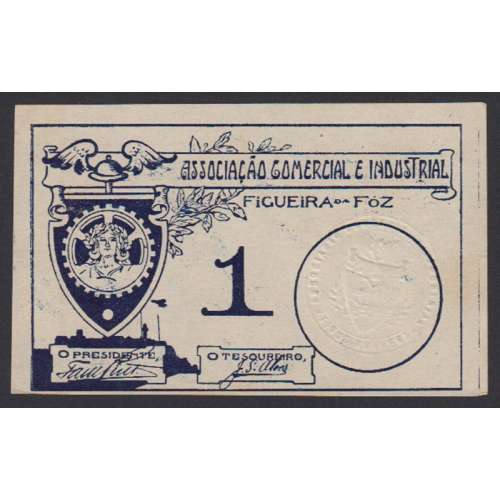
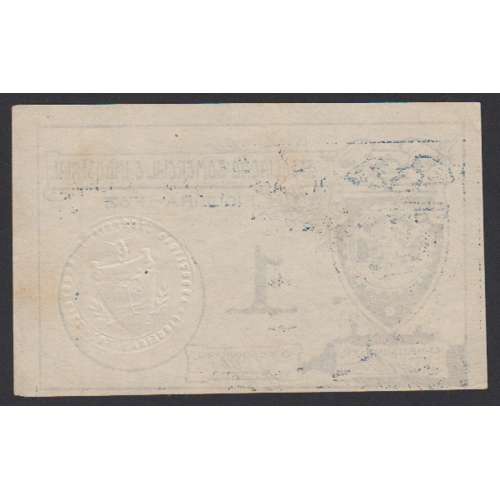
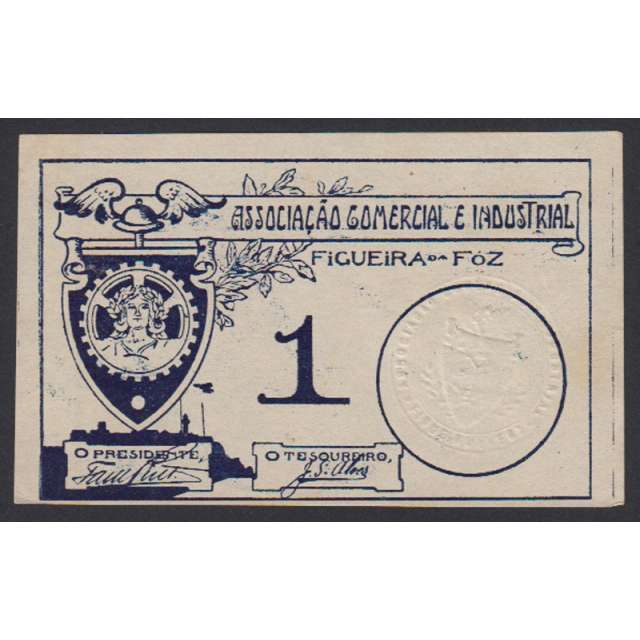
CÉDULA DA ASSOCIAÇÃO COMERCIAL E INDUSTRIAL DA FIGUEIRA DA FOZ - 1 CENTAVOS
UNIFACE - MANCHA 88 x 54
COM SELO BRANCO
SEM FIRMA IMPRESSORA NO RODAPÉ
ESTADO CONSERVAÇÃO (NÃO CIRCULADA)
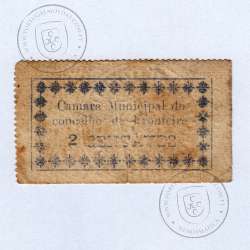
Portuguese notgeld, 2 Centavos Camara Municipal do Concelho de Fronteira, (C), Private emergency money notes from 1917 to 1925. In Portugal, there were two main periods of emergency money, the first being during the financial crisis of 1891, the second, at the end of the First World War, between 1917 and 1925, it is in this last period where a greater issuance and increase in emergency money is concentrated. Due to the great inflation that led to the devaluation of money and the increase in the value of the metals used in coins, which was already higher than their face value, leading to the almost total disappearance of coins from the market, these were hoarded as an investment by people or they were looted from the market because their face value was lower than their intrinsic value. In such circumstances, in which metallic coins were almost extinct, the need for small money was increasingly felt, a new resource currency appeared, the paper banknote which was intended to replace coins from one to twenty cents, whose issuance was initially only authorized by the Mint, but, as the measure was insufficiency, it proved to be incapable of filling the shortage of coins, resulting in its issuance being authorized under the responsibility of municipal councils, Misericórdias and other public entities, and even private individuals, even though some were considered illegal, they were still accepted locally as the only way to make up for the shortage of change in small, day-to-day commercial transactions.
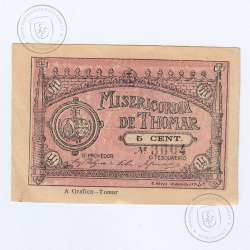
Portuguese notgeld, 5 Centavos de Tomar, "MISERICORDIA DE THOMAR", (PC), Private emergency money notes from 1917 to 1925. In Portugal, there were two main periods of emergency money, the first being during the financial crisis of 1891, the second, at the end of the First World War, between 1917 and 1925, it is in this last period where a greater issuance and increase in emergency money is concentrated. Due to the great inflation that led to the devaluation of money and the increase in the value of the metals used in coins, which was already higher than their face value, leading to the almost total disappearance of coins from the market, these were hoarded as an investment by people or they were looted from the market because their face value was lower than their intrinsic value. In such circumstances, in which metallic coins were almost extinct, the need for small money was increasingly felt, a new resource currency appeared, the paper banknote which was intended to replace coins from one to twenty cents, whose issuance was initially only authorized by the Mint, but, as the measure was insufficiency, it proved to be incapable of filling the shortage of coins, resulting in its issuance being authorized under the responsibility of municipal councils, Misericórdias and other public entities, and even private individuals, even though some were considered illegal, they were still accepted locally as the only way to make up for the shortage of change in small, day-to-day commercial transactions.
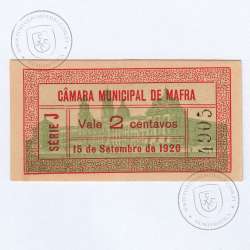
Portuguese notgeld, 2 Centavos Camara Municipal de Mafra, (NC), Private emergency money notes from 1917 to 1925. In Portugal, there were two main periods of emergency money, the first being during the financial crisis of 1891, the second, at the end of the First World War, between 1917 and 1925, it is in this last period where a greater issuance and increase in emergency money is concentrated. Due to the great inflation that led to the devaluation of money and the increase in the value of the metals used in coins, which was already higher than their face value, leading to the almost total disappearance of coins from the market, these were hoarded as an investment by people or they were looted from the market because their face value was lower than their intrinsic value. In such circumstances, in which metallic coins were almost extinct, the need for small money was increasingly felt, a new resource currency appeared, the paper banknote which was intended to replace coins from one to twenty cents, whose issuance was initially only authorized by the Mint, but, as the measure was insufficiency, it proved to be incapable of filling the shortage of coins, resulting in its issuance being authorized under the responsibility of municipal councils, Misericórdias and other public entities, and even private individuals, even though some were considered illegal, they were still accepted locally as the only way to make up for the shortage of change in small, day-to-day commercial transactions.