
 Português


Coins of the Roman Republic
Coins of the Roman Republic
Coins of the Roman Republic represent the earliest major monetary issues of Rome, minted between the 4th and 1st centuries BC, reflecting the military, political and social expansion that led to Roman dominance of the Mediterranean. These issues include denarii, quinarii, victoriati, asses and other denominations struck by republican magistrates and senatorial families, featuring deities, military symbols, allegorical themes and references to the Roman gentes that shaped the Republic’s history. They form one of the foundations of classical numismatics and document Rome’s development up to the rise of the Empire.

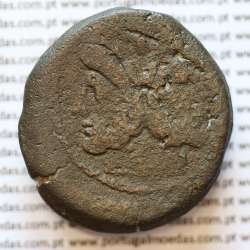
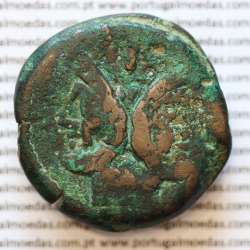
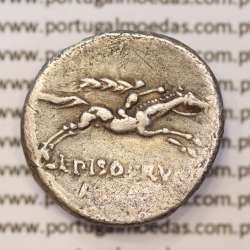
DENÁRIO PRATA DA REPÚBLICA ROMANA FAMÍLIA “CALPURNIA” (ANO 90 a.C. a 89 a.C.) LEGENDA (L PISO FRVG / A)
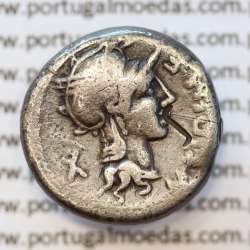

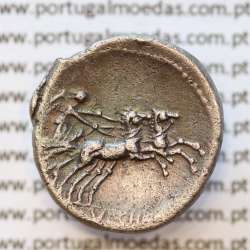
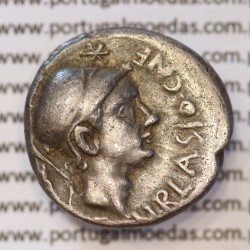

MOEDA ASSE “AS” BRONZE DA REPÚBLICA ROMANA FAMÍLIA “CORNELIA” (ANO 169 a.C. a 158 a.C.) LEGENDA (P BLAS / ROMA)
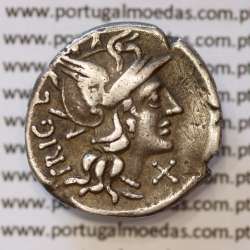
MOEDA DENÁRIO PRATA DA REPÚBLICA ROMANA FAMÍLIA “CURIATIA” (ANO 142 a.C.) LEGENDA (TRIGE / C. CVR / ROMA.)
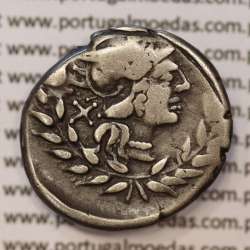


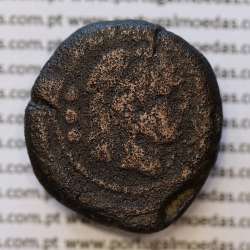
MOEDA TRIENS BRONZE DA REPÚBLICA ROMANA FAMÍLIA “MAMILIA” (ANO 189 a.C. 190 a.C.) “L. MAMILIUS” LEGENDA (ROMA)

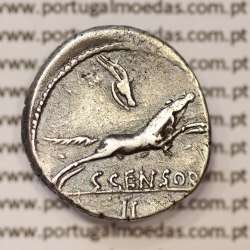
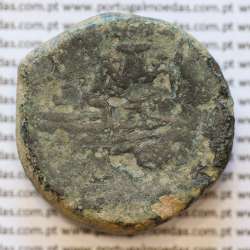
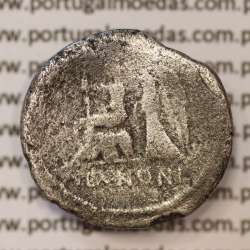


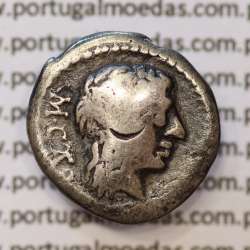

MOEDA DENÁRIO PRATA DA REPÚBLICA ROMANA FAMÍLIA “POSTUMIA” (ANO 48 a.C.) LEGENDA (PIETAS / ALBINVS BRVTI F.)

MOEDA DENÁRIO PRATA DA REPÚBLICA ROMANA FAMÍLIA “TITIA” (ANO 90 a.C.) “Q. TITIUS” LEGENDA (Q. TITI)

MOEDA DENÁRIO PRATA DA REPÚBLICA ROMANA FAMÍLIA “VALERIA” (ANO 108 a.C. a 107 a.C.) LEGENDA (L. VALERI. ELACCI.)
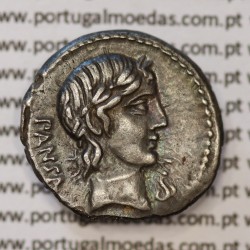
Roman Republican Denarius 90 BC, C. Vibius Pansa, Apollo, Victoria Quadriga, Small Head Variant, Leg: PANSA / C. VIBIVS. C. F.
This silver denarius was minted in 90 BC in Rome by the moneyer C. Vibius Pansa, a member of the ancient Gens Vibia.
The obverse features a laureate head of Apollo facing right, with a snake symbol in front and the legend PANSA behind.
The reverse depicts Victoria driving a quadriga to the right, with the legend C. VIBIVS. C. F. below.
This coin corresponds to the small head variant (~10 mm) of Apollo, one of several known types in this series.
References: Crawford 342/5, Seaby 684, Sear 242.
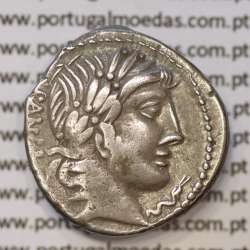
Roman Republican Denarius 90 BC, C. Vibius Pansa, Apollo / Victoria Quadriga, Large Head Variant, Leg: PANSA / C. VIBIVS. C. F.
This silver denarius was minted in 90 BC in Rome by the moneyer C. Vibius Pansa, a member of the ancient Gens Vibia.
The obverse features a laureate head of Apollo facing right, with a snake symbol in front and the legend PANSA behind.
The reverse depicts Victoria driving a quadriga to the right, with the legend C. VIBIVS. C. F. below.
This coin corresponds to the large head variant (~12 mm) of Apollo, one of several known types in this series.
References: Crawford 342/5, Seaby 684, Sear 242.


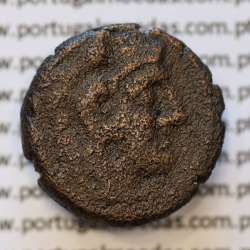


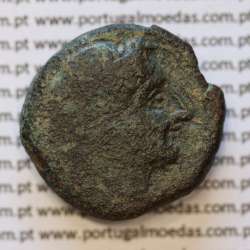
MOEDA TRIENS BRONZE ANÓNIMO DA REPÚBLICA ROMANA, CABEÇA DE ROMA COM CAPACETE / PROA / ROMA
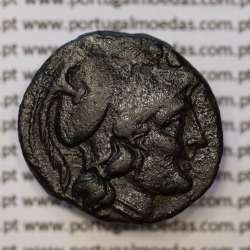
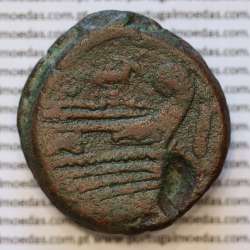
MOEDA ASSE “AS” BRONZE ANÓNIMO DA REPÚBLICA ROMANA (ANO 168 a.C. A 159 a.C.)

MOEDA ASSE “AS” BRONZE ANÓNIMO DA REPÚBLICA ROMANA (ANO 210 a.C. A 150 a.C.) DIMENSÕES E PESO ACIMA DA MEDIA
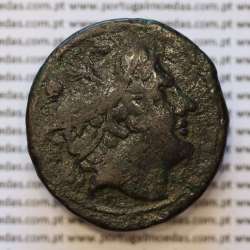
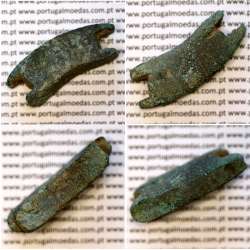
Roman Republic, Aes Formatum, Pre-coin bronze from the Roman Republic 6th-3rd century BC, Approximate dimension: 44x15x10 mm
Roman Republic, Aes Formatum, AE, Pre-coin bronze from the Roman Republic 6th-3rd century BC, Approximate dimension: 44x15x10 mm Weight: 36.57 g. The "Aes Formatum" pre-coins are small cast bronze ingots with a recognized shape, these were used as payment currency in commercial transactions between the 6th and 3rd centuries BC, they are the successor coins of the "Aes Rude" which were pieces of bronze without shape, looking more like metallic slag. As the "Aes Formatum" system did not have a standard value, the values at the time were determined based on the weights of the individual pieces, very little is known about this type of pre-currency as there is a great diversity of recognized formats, and the exact date when they were made, as well as the exact location to which each type is attributed, however, from finds throughout Europe it is now known that these pre-coins were recognized and accepted as currency until the appearance of standard coins.